


Our Story
Experience culture & tradition in the heart of Ahmedabad old city
Experience culture & tradition in the heart of Ahmedabad old city
Our Story
Experience culture & tradition in the heart of Ahmedabad old city
A Heritage Restored. A Story Reborn
French Haveli strives to be an example of creating value in investing , restoring and decorating heritage homes. Heritage and cultural identities are best preserved as an Economic Challenge, faced by many historic city cores like ahmedabad old city, A Unesco World Heritage site.
French haveli in a decade , has successfully demonstrated partnerships and community based eco-systems are best sustained.
Continue reading...
Ashaval Walk Brochure


A Heritage Restored. A Story Reborn
French Haveli strives to be an example of creating value in investing , restoring and decorating heritage homes. Heritage and cultural identities are best preserved as an Economic Challenge, faced by many historic city cores like ahmedabad old city, A Unesco World Heritage site.
French haveli in a decade , has successfully demonstrated partnerships and community based eco-systems are best sustained.
Continue reading...
Ashaval Walk Brochure
A Heritage Restored. A Story Reborn
French Haveli strives to be an example of creating value in investing , restoring and decorating heritage homes. Heritage and cultural identities are best preserved as an Economic Challenge, faced by many historic city cores like ahmedabad old city, A Unesco World Heritage site.
French haveli in a decade , has successfully demonstrated partnerships and community based eco-systems are best sustained.
Continue reading...
Ashaval Walk Brochure

Dhal ni Pol Where Ahmedabad Began
Staying at French Haveli allows you to become part of this timeless neighbourhood—not merely as a visitor, but as a resident of its remarkable history.
Long before Ahmedabad was founded in 1411 by Sultan Ahmed Shah, this part of the city was known as Ashaval (also called Ashapalli), an important settlement on the banks of the Sabarmati.
According to local tradition, this area is associated with Asha Bhil, the Bhil chieftain who ruled the settlement, and with Asha Bhil no Tekro, believed to have been located in and around present-day Dhal ni Pol. The nearby Ashapuri Mata Temple continues to preserve this enduring memory, making Dhal ni Pol one of the most evocative places from which to explore the origins of Ahmedabad.
Over the centuries, Dhal ni Pol evolved into one of Ahmedabad's most distinguished residential neighbourhoods, where merchants, artisans, scholars and community leaders built magnificent wooden havelis, temples and public spaces.
Today, these beautifully carved homes, intimate lanes, vibrant chowks,sacred shrines, historic wells, community squares and centuries-old traditions continue to thrive, offering visitors a rare opportunity to experience the living heritage of India's first UNESCO World Heritage City.
Ashaval Walk brochure is available for download . A guided walk can also be done.
Dhal ni Pol Where Ahmedabad Began
Staying at French Haveli allows you to become part of this timeless neighbourhood—not merely as a visitor, but as a resident of its remarkable history.
Long before Ahmedabad was founded in 1411 by Sultan Ahmed Shah, this part of the city was known as Ashaval (also called Ashapalli), an important settlement on the banks of the Sabarmati.
According to local tradition, this area is associated with Asha Bhil, the Bhil chieftain who ruled the settlement, and with Asha Bhil no Tekro, believed to have been located in and around present-day Dhal ni Pol. The nearby Ashapuri Mata Temple continues to preserve this enduring memory, making Dhal ni Pol one of the most evocative places from which to explore the origins of Ahmedabad.
Over the centuries, Dhal ni Pol evolved into one of Ahmedabad's most distinguished residential neighbourhoods, where merchants, artisans, scholars and community leaders built magnificent wooden havelis, temples and public spaces.
Today, these beautifully carved homes, intimate lanes, vibrant chowks,sacred shrines, historic wells, community squares and centuries-old traditions continue to thrive, offering visitors a rare opportunity to experience the living heritage of India's first UNESCO World Heritage City.
Ashaval Walk brochure is available for download . A guided walk can also be done.
Dhal ni Pol Where Ahmedabad Began
Staying at French Haveli allows you to become part of this timeless neighbourhood—not merely as a visitor, but as a resident of its remarkable history.
Long before Ahmedabad was founded in 1411 by Sultan Ahmed Shah, this part of the city was known as Ashaval (also called Ashapalli), an important settlement on the banks of the Sabarmati.
According to local tradition, this area is associated with Asha Bhil, the Bhil chieftain who ruled the settlement, and with Asha Bhil no Tekro, believed to have been located in and around present-day Dhal ni Pol. The nearby Ashapuri Mata Temple continues to preserve this enduring memory, making Dhal ni Pol one of the most evocative places from which to explore the origins of Ahmedabad.
Over the centuries, Dhal ni Pol evolved into one of Ahmedabad's most distinguished residential neighbourhoods, where merchants, artisans, scholars and community leaders built magnificent wooden havelis, temples and public spaces.
Today, these beautifully carved homes, intimate lanes, vibrant chowks,sacred shrines, historic wells, community squares and centuries-old traditions continue to thrive, offering visitors a rare opportunity to experience the living heritage of India's first UNESCO World Heritage City.
Ashaval Walk brochure is available for download . A guided walk can also be done.
Dhal ni Pol Where Ahmedabad Began
Staying at French Haveli allows you to become part of this timeless neighbourhood—not merely as a visitor, but as a resident of its remarkable history.
Long before Ahmedabad was founded in 1411 by Sultan Ahmed Shah, this part of the city was known as Ashaval (also called Ashapalli), an important settlement on the banks of the Sabarmati.
According to local tradition, this area is associated with Asha Bhil, the Bhil chieftain who ruled the settlement, and with Asha Bhil no Tekro, believed to have been located in and around present-day Dhal ni Pol. The nearby Ashapuri Mata Temple continues to preserve this enduring memory, making Dhal ni Pol one of the most evocative places from which to explore the origins of Ahmedabad.
Over the centuries, Dhal ni Pol evolved into one of Ahmedabad's most distinguished residential neighbourhoods, where merchants, artisans, scholars and community leaders built magnificent wooden havelis, temples and public spaces.
Today, these beautifully carved homes, intimate lanes, vibrant chowks,sacred shrines, historic wells, community squares and centuries-old traditions continue to thrive, offering visitors a rare opportunity to experience the living heritage of India's first UNESCO World Heritage City.
Ashaval Walk brochure is available for download . A guided walk can also be done.
Restoration – Rediscovering the Soul of the Haveli
Restoration – Rediscovering the Soul of the Haveli
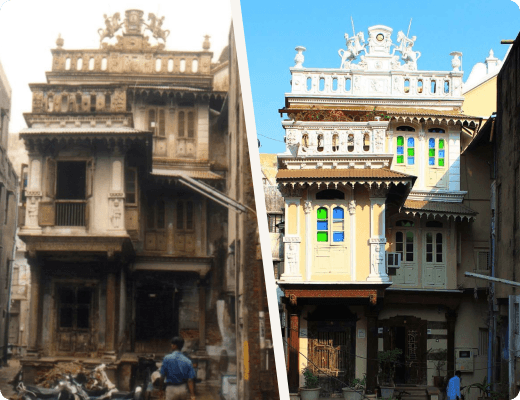
French Haveli is a remarkable example of Ahmedabad's Colonial Eclectic architecture, reflecting the city's evolving architectural identity during the late nineteenth and early twentieth centuries.
The house begins as a traditional Gujarati wooden haveli, with richly carved timber columns, intricately crafted brackets and the characteristic spatial planning of a pol house. As the building rises, its architecture gradually transforms into an elegant Indo-European composition, culminating in an ornate terrace crowned by a central clock pediment and flanked by two equestrian sculptures—a distinctive feature rarely found in Ahmedabad's residential heritage.
Over more than a century, the changing needs of successive generations and multiple ownerships led to numerous alterations. Spaces were subdivided, traditional elements were concealed, and many of the defining features of the original house were either modified or lost.
Read More
Ashaval Walk Brochure
Restoration Report
Restoration Report

Restoration Report
Restoration Report
Restoration – Rediscovering the Soul of the Haveli
French Haveli is a remarkable example of Ahmedabad's Colonial Eclectic architecture, reflecting the city's evolving architectural identity during the late nineteenth and early twentieth centuries.
The house begins as a traditional Gujarati wooden haveli, with richly carved timber columns, intricately crafted brackets and the characteristic spatial planning of a pol house. As the building rises, its architecture gradually transforms into an elegant Indo-European composition, culminating in an ornate terrace crowned by a central clock pediment and flanked by two equestrian sculptures—a distinctive feature rarely found in Ahmedabad's residential heritage.
Over more than a century, the changing needs of successive generations and multiple ownerships led to numerous alterations. Spaces were subdivided, traditional elements were concealed, and many of the defining features of the original house were either modified or lost.
Read More
Ashaval Walk Brochure
Restoration Report
Restoration Report







Shoot at French Haveli
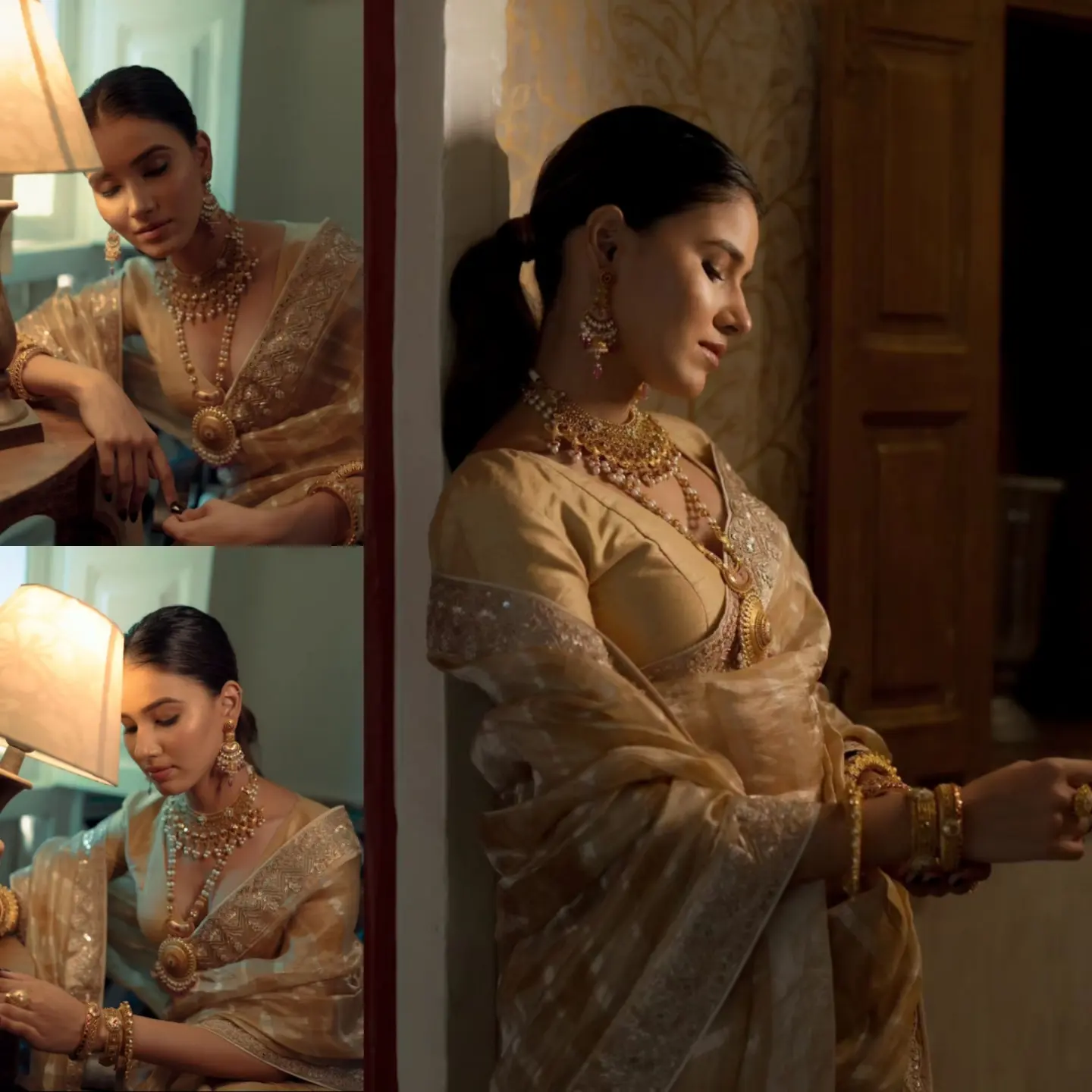
A 150-year-old living set of carved wood, jharokhas and a sky-lit courtyard a rare, characterful backdrop for films, fashion editorials, pre-wedding shoots and creative productions.
Contact Us
Contact Us
Shoot at
French Haveli
A 150-year-old living set of carved wood, jharokhas and a sky-lit courtyard a rare, characterful backdrop for films, fashion editorials, pre-wedding shoots and creative productions.
Contact Us
Contact Us
Shoot at French Haveli
A 150-year-old living set of carved wood, jharokhas and a sky-lit courtyard a rare, characterful backdrop for films, fashion editorials, pre-wedding shoots and creative productions.
Contact Us
Contact Us
Media
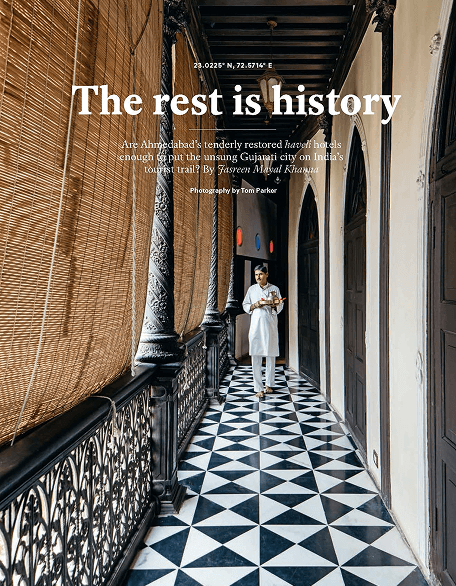
Explore stories, editorials, and features showcasing the unique heritage and cultural experience of French Haveli.


Media
Explore stories, editorials, and features showcasing the unique heritage and cultural experience of French Haveli.
Media
Explore stories, editorials, and features showcasing the unique heritage and cultural experience of French Haveli.
Media
Explore stories, editorials, and features showcasing the unique heritage and cultural experience of French Haveli.
How we are engaging with the locals
Tourists coming from different parts of the world intrigue the locals, but this also instills a sense of pride and ownership. We share a vision of upgrading the quality of life through events and festivals around the French Haveli.

Musical Recital

Sports Day

Salsa social- Heritage festival
How we are engaging with the locals
Tourists coming from different parts of the world intrigue the locals, but this also instills a sense of pride and ownership. We share a vision of upgrading the quality of life through events and festivals around the French Haveli.
Musical Recital
Sports Day
Salsa social- Heritage festival
Way Forward
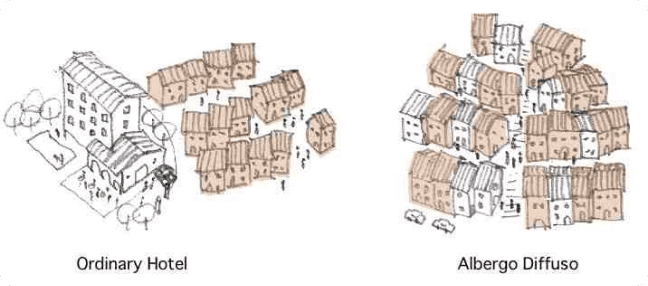
A need for an economic model to preserve heritage in our old city. One such Italian model “Albergo Diffuso” ( scattered hotel), a concept of Scattered Rooms in old italian villages : rooms in different house but same management.
Our old cities have amazing arrays of unique houses. We believe we could also have scattered rooms. Each house is different and offers varied experiences. Baghban Haveli is one of the other property that now offers 5 unique suite rooms. We aspire to add rooms with time. We aspire to create an example of an entire revitalized area around french haveli.
Know more about our foundation's initiative to revitalize the entire 'dhal ni pol' as a pilot project. Threee Foundation.
Way Forward
A need for an economic model to preserve heritage in our old city. One such Italian model “Albergo Diffuso” ( scattered hotel), a concept of Scattered Rooms in old italian villages : rooms in different house but same management.
Our old cities have amazing arrays of unique houses. We believe we could also have scattered rooms. Each house is different and offers varied experiences. Baghban Haveli is one of the other property that now offers 5 unique suite rooms. We aspire to add rooms with time. We aspire to create an example of an entire revitalized area around french haveli.
Know more about our foundation's initiative to revitalize the entire 'dhal ni pol' as a pilot project. Threee Foundation.

Our Strategy
Our Strategy
The community space around French Haveli has the potential to become a preserved heritage area. We interact with the community around French Haveli to create an environment of stake and partnerships for elevation of the entire cluster.French haveli extends support to the community who want to use their heritage homes for ‘home stays’ or any other adaptive reuse for economic benefit, supports Initiatives such as cleanliness, sanitation that can improve the quality of life.
Our Strategy
Our Strategy
The community space around French Haveli has the potential to become a preserved heritage area. We interact with the community around French Haveli to create an environment of stake and partnerships for elevation of the entire cluster.French haveli extends support to the community who want to use their heritage homes for ‘home stays’ or any other adaptive reuse for economic benefit, supports Initiatives such as cleanliness, sanitation that can improve the quality of life.


Explore Ahmedabad’s
Old City by Tuk Tuk
Discover hidden pols, bazaars, historic temples, and local stories as our trusted rickshaw drivers guide you through the heart of Old Ahmedabad.
Explore Ahmedabad’s Old City by Tuk Tuk
Discover hidden pols, bazaars, historic temples, and local stories as our trusted rickshaw drivers guide you through the heart of Old Ahmedabad.
Explore Ahmedabad’s Old City by Tuk Tuk
Discover hidden pols, bazaars, historic temples, and local stories as our trusted rickshaw drivers guide you through the heart of Old Ahmedabad.

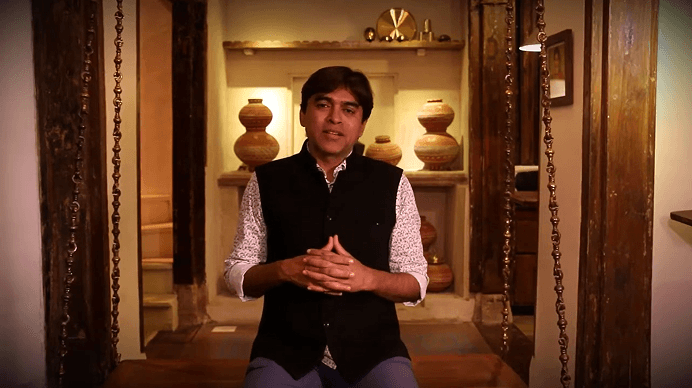
Know more about our other Initiative
Know more about our other Initiative
THREEE Foundation: The Heritage Research for Economics Ecosystem Enterprise Foundation
THREEE Foundation: The Heritage Research for Economics Ecosystem Enterprise Foundation

